
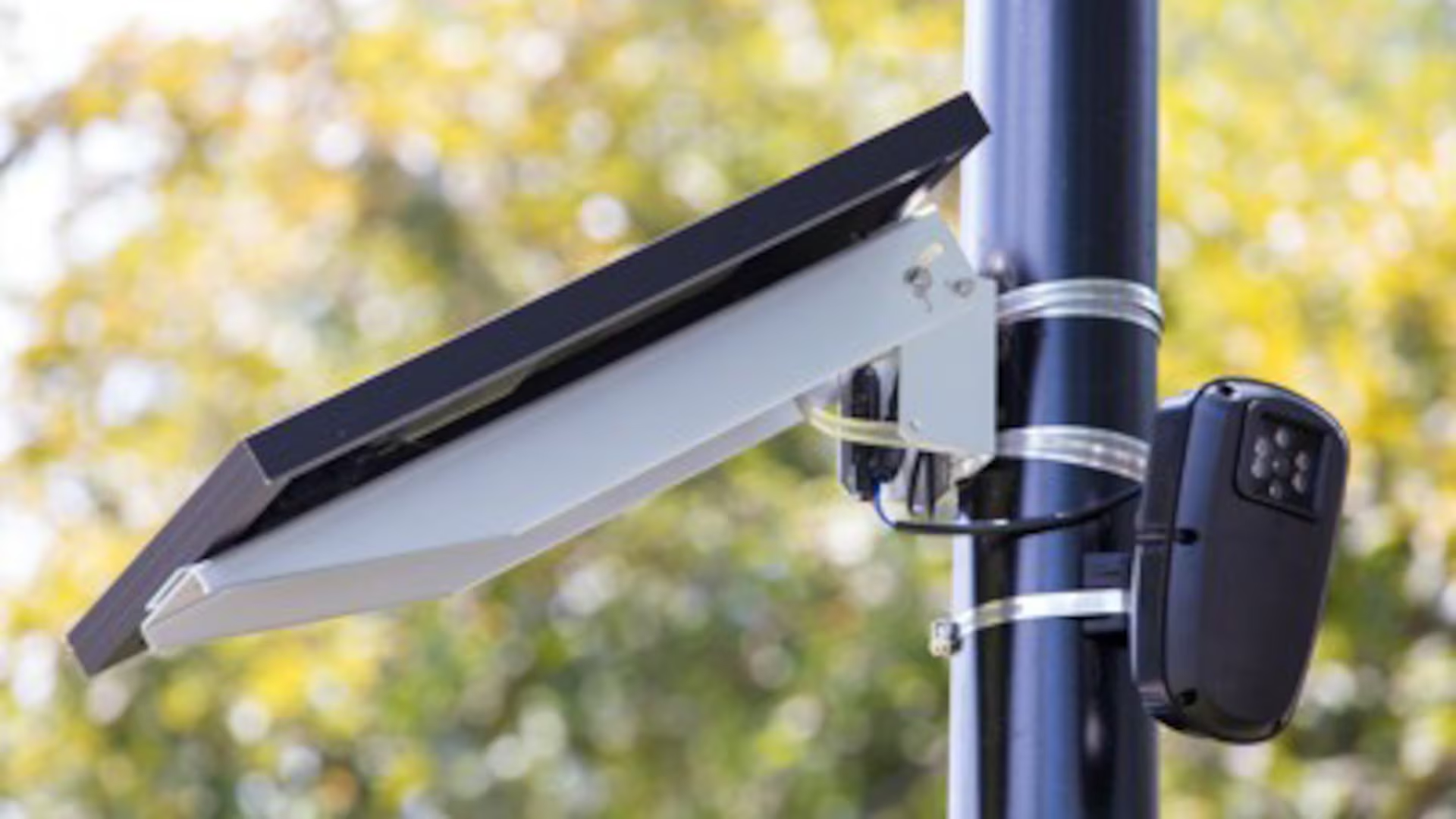
Those little cameras you drive past around Alpharetta are part of a much bigger network than many residents may realize.
A WIRED investigation published Aug. 28, 2026 says data collected through Alpharetta Police Department’s Flock license-plate-reader network is accessible to more than 2,000 organizations nationwide. WIRED also reports Alpharetta receives Flock data from more than 1,300 other entities.
And the timing matters. One day earlier, WIRED separately reported on an internal Alpharetta Police investigation involving an officer accused of repeatedly using Flock searches to track vehicles connected to his former partner and another officer.
The short version: Flock can be a legitimate public-safety tool used to help locate stolen vehicles, suspects and missing people. But Alpharetta’s reported sharing footprint, combined with a local misuse investigation, raises a separate question residents deserve to understand: who can access this data, why are they searching it, and what happens when someone misuses the system?
What WIRED found about Alpharetta’s Flock network
WIRED reports that data captured by Alpharetta Police Department’s Flock cameras is accessible to more than 2,000 police departments, colleges, airports and government organizations around the country.
The same investigation says Alpharetta receives Flock data from more than 1,300 entities.
According to WIRED, the network has expanded quickly. Since June 2025, the number of entities receiving data from Alpharetta police reportedly increased by about 42%, while the number sending data to Alpharetta increased by about 125%.

The reported 500-mile sharing setting
One of the most important details in the reporting concerns how sharing requests are handled.
WIRED reports that an Alpharetta Police lieutenant said requests from law-enforcement agencies within roughly 500 miles are automatically approved under Alpharetta’s current settings, while requests from outside that radius require individual approval.
That does not mean every organization is constantly tracking every vehicle. It means participating agencies may have the ability to search shared Flock data depending on the network settings, permissions and law-enforcement purpose involved.
The Alpharetta officer misuse investigation
This is where the privacy and oversight discussion becomes much more concrete.
WIRED reported Aug. 27 that it reviewed an internal Alpharetta Police investigation written by Sgt. Jabbar Braithwaite involving an officer accused of using Flock searches for reasons unrelated to a legitimate law-enforcement investigation.
According to WIRED’s review of those records, investigators identified 56 searches involving a vehicle associated with the officer’s former partner and 29 searches involving another Alpharetta officer, along with additional searches involving a vehicle the former partner had borrowed.
WIRED reports the officer resigned on Aug. 5, 2026. The publication also reported that a criminal investigation was ongoing at the time of its story.

That distinction matters: the allegation is not that Flock itself conducted improper searches. The concern is that an authorized user allegedly used a powerful law-enforcement database improperly.
What Georgia law says about license-plate-reader data
Georgia already has a statute specifically governing automated license plate recognition systems: O.C.G.A. § 35-1-22.
- The statute says captured license-plate data may be obtained or accessed for a law-enforcement purpose.
- Law-enforcement agencies may share ALPR information with other law-enforcement agencies for authorized purposes.
- Georgia law requires agencies using an ALPR system to maintain a written policy governing its use.
- Knowingly obtaining ALPR information under false pretenses or for an unauthorized purpose can carry criminal penalties.
Georgia law also addresses retention. The statute allows captured ALPR data to be retained for up to 30 months under the conditions established in the law. That should not be confused with Flock’s more recent recommendation that agencies adopt much shorter retention periods.

What Flock says it is changing
Flock announced a new set of privacy and accountability safeguards on Aug. 13, 2026.
- Flock says it now recommends and defaults new deployments to a 7-day retention period for license-plate-reader data, although existing customers may operate under other approved retention settings.
- The company says Audit Assistance, designed to identify abnormal search activity, will become mandatory for law-enforcement customers by the end of 2026.
- Flock says it is moving toward required case codes for law-enforcement searches, with emergency exceptions subject to review.
- Flock says customers own and control their data and determine access, sharing and retention within applicable law and policy.
The 7-day recommendation is a Flock policy initiative. It is not the same thing as Georgia’s statutory retention limit.

Why police departments use Flock in the first place
There is a real public-safety argument for this technology.
Automatic license plate readers can help investigators locate stolen cars, vehicles connected to crimes, missing people or suspects who move between jurisdictions. A network is more useful to police precisely because a vehicle does not stop being relevant when it crosses a city or county line.
That is why this story should not be reduced to “cameras are bad” or “privacy concerns are overblown.” The useful question is whether the system delivers public-safety value with strong enough controls around access, auditing, retention and accountability.
What does this have to do with living in Alpharetta?
When people decide where to live, they think about schools, taxes, traffic, parks, development, restaurants and public safety. Increasingly, local technology policy belongs in that conversation too.
Some Alpharetta residents may look at a large regional Flock network and feel safer knowing police have more tools available when a serious crime occurs.
Others may look at the same system and ask whether the sharing footprint is broader than they expected, whether searches are reviewed quickly enough and whether residents have enough visibility into how the technology is being used.
Both are legitimate questions.
I do not have evidence that Alpharetta’s Flock policy raises or lowers property values, and I would not make that claim. The real-estate connection is more fundamental: public safety, privacy, trust in local government and quality of life all matter when people decide where they want to live.
Would this make you feel safer or more concerned?
That is the debate worth having. Flock can be a legitimate public-safety tool and still require scrutiny around access, retention, sharing and misuse. Those ideas are not mutually exclusive.
What still needs to be verified directly from Alpharetta
The strongest next step is comparing the national reporting with Alpharetta’s current source documents. I am specifically looking for:
- Alpharetta’s current Flock contract and camera inventory
- the city’s current data-retention setting
- the exact sharing and approval configuration
- whether the reported 500-mile automatic-approval setting remains current
- the city’s written ALPR or acceptable-use policy required under Georgia law
- audit and oversight procedures
- any current transparency portal or public reporting available to residents

I will continue updating this story with those records rather than filling gaps with assumptions.

Bottom line
The headline is significant: according to WIRED’s public-records investigation, Alpharetta Police Flock data is accessible to more than 2,000 organizations, while Alpharetta receives data from more than 1,300.
The separate officer investigation shows why audit controls matter. Georgia law restricts ALPR access to authorized law-enforcement purposes, and Flock says it is adding stronger safeguards. The local question is whether Alpharetta’s current settings and oversight match what residents expect from a system this powerful.
Want the source breakdown?
Follow BBDN and BrokerBroDad for the local follow-up. On the Reel, comment INFO and I’ll send you the full article and source breakdown.
Sources
- WIRED: How an Atlanta Suburb Ended Up Sharing Flock Data With More Than 2,000 Organizations, Aug. 28, 2026
- WIRED: A Georgia Cop Used Flock to Track 2 Other Cops, His Ex, and Her Friend, Aug. 27, 2026
- Georgia Code § 35-1-22: Automated License Plate Recognition Systems
- Flock Safety: Privacy, Accountability, Security and Transparency Safeguards, Aug. 13, 2026
- Flock Safety: Customers Own and Control Their Flock Data, July 27, 2026
- MuckRock: Alpharetta Flock Settings Open Records Request
- AJC: Alpharetta Police Get Access to Flock Tag Reader Data, historical context
- EFF Atlas of Surveillance: Alpharetta Police Department Automated License Plate Readers